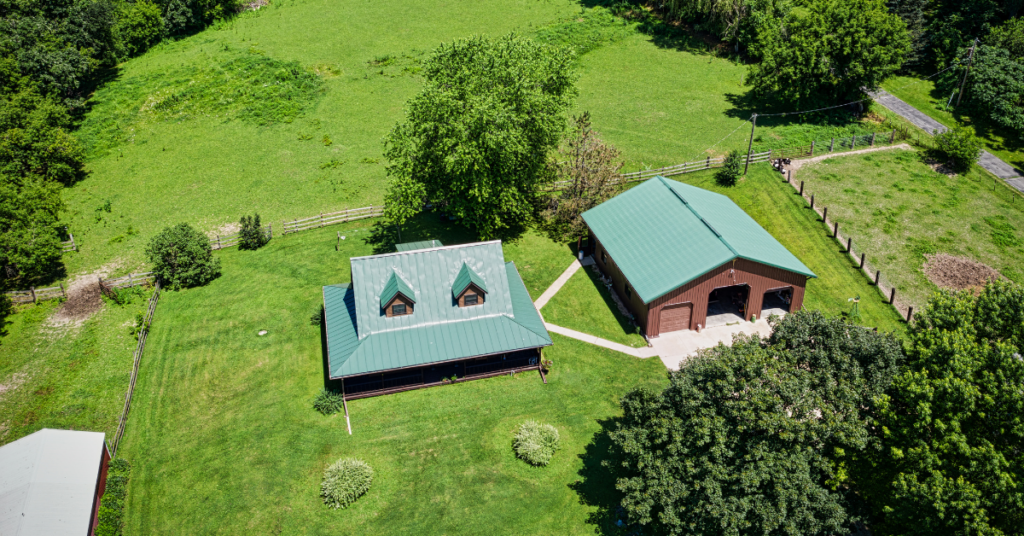
When it comes to the DMV, it doesn’t take long to get out of the more metropolitan areas into the region’s rolling hills and scenic countryside, i.e., perfect locations for a working or weekend farm, or just a stretch of property with a barn and a few outbuildings. Most “home security systems,” however, are designed around a more familiar picture: a house on a small suburban lot, a front door a few steps from the sidewalk, and neighbors close enough to notice if something’s wrong. But rural properties come with a unique set of challenges: long approaches, multiple structures, and wide gaps between the house and the road. At Next Generation Security Concepts (NGSC), we’ve spent years building property security systems for homeowners in all parts of Maryland, Virginia, West Virginia, and Washington, DC, and we know these aren’t unusual conditions in our service area; they’re the norm.
Why Rural and Large Properties Need a Different Security Approach
A standard suburban security setup assumes help is minutes away and the property line is close to the front door. Neither assumption holds true farther away from civilization, and that changes how a system should be built:
- Response times run longer. In rural areas, law enforcement may be a considerable drive away, which raises the value of deterrence and early detection over a fast response.
- There are more entry points and blind spots. Detached buildings, fence lines, tree cover, and multiple gates all create ways onto a property that a typical home doesn’t have to think about.
- Detection distance matters more. On a large lot, the goal isn’t catching someone at the door; it’s knowing they’re on the property well before they reach the house.
Start at the Perimeter: Driveways, Gates & Property Lines
For a large property, real property security starts long before someone reaches the front door. A driveway alarm system gives homeowners advance warning the moment a vehicle or person crosses onto the property, whether that’s a quarter mile out or right at the gate.
That advance notice matters more the longer the driveway gets. A driveway alarm system paired with gate access control lets homeowners see and manage who’s coming and going, without relying on someone happening to look outside. And because long driveways change sightlines, camera and sensor placement must be planned around the driveway itself, not just the house. A few low-cost additions round out perimeter protection:
- Motion-triggered lighting along the driveway and around outbuildings
- Visible signage that signals a monitored property
- Sensors placed at gates and where fence lines meet the road
Outdoor Cameras Built for Distance and Low Light
Doorbell cameras work fine for seeing who’s on the porch, but they weren’t built to cover two hundred yards of open field or a driveway that curves out of sight. Homeowners searching for the best outdoor security cameras for rural areas need something different: cameras rated for distance, weather, and darkness, not close-range footage of who’s ringing the bell.
The best outdoor security cameras for rural areas share a few traits: strong night vision, wide coverage areas, and housings built to hold up against wind, rain, and temperature swings that a suburban camera rarely has to handle. But camera hardware is only half the equation. Placement is a strategy, not just a purchase decision, which is why it’s worth pairing video surveillance planning with a professional property assessment.
Securing Outbuildings: Garages, Barns, Sheds & Workshops
Detached structures often hold some of a property’s most valuable equipment: tools, tractors, ATVs, generators, and other gear that’s expensive to replace but easy to move. They’re also frequently the least monitored part of a rural property, since they sit outside the range of a typical home security setup.
Rather than bolting on separate consumer gadgets for each building, outbuildings hold up better as part of one connected system:
- Entry sensors on barn and shed doors that report to the same system as the house
- Cameras covering garages, workshops, and equipment storage
- A single monitoring platform instead of a patchwork of disconnected apps and devices
Tying every structure into one system means a triggered sensor in the barn gets the same response as one at the back door, instead of getting missed entirely.
Connectivity and Power Challenges Unique to Rural Homes
Rural properties don’t always have the reliable internet and power that suburban security systems assume. Spotty connectivity and power outages are common realities, and a property security system that depends entirely on Wi-Fi and wall power isn’t built for them.
That’s where cellular backup and battery backup earn their keep. Cellular backup keeps a system connected to monitoring even when internet service drops, and battery backup keeps it running through a power outage, which is exactly when a property is most vulnerable. A professionally designed system accounts for these gaps from the start. An off-the-shelf DIY kit usually doesn’t: a difference that can show up at the worst possible time.
Tying It All Together With Professional Monitoring
All of this, perimeter detection, outdoor cameras, outbuilding coverage, and reliable connectivity, works best as one integrated system rather than a collection of separate parts. That’s the idea behind farm security systems built by an experienced integrator: Everything reports to the same place, so a triggered alarm at the gate, a motion event at the barn, and a camera alert at the house tell one coherent story.
Professional alarm monitoring means a trained operator is watching around the clock, not just when someone happens to check an app. And with remote access through Honeywell Total Connect, owners can check in on a large property, whether that’s the house, the driveway, or the far barn, from anywhere.
NGSC designs farm security systems and full property security solutions for homeowners across Maryland, Virginia, West Virginia, and Washington, DC. If a standard home security package doesn’t match the way your property is laid out, reach out for a free security assessment, and we’ll help you build a system that covers all of it, not just the front door.