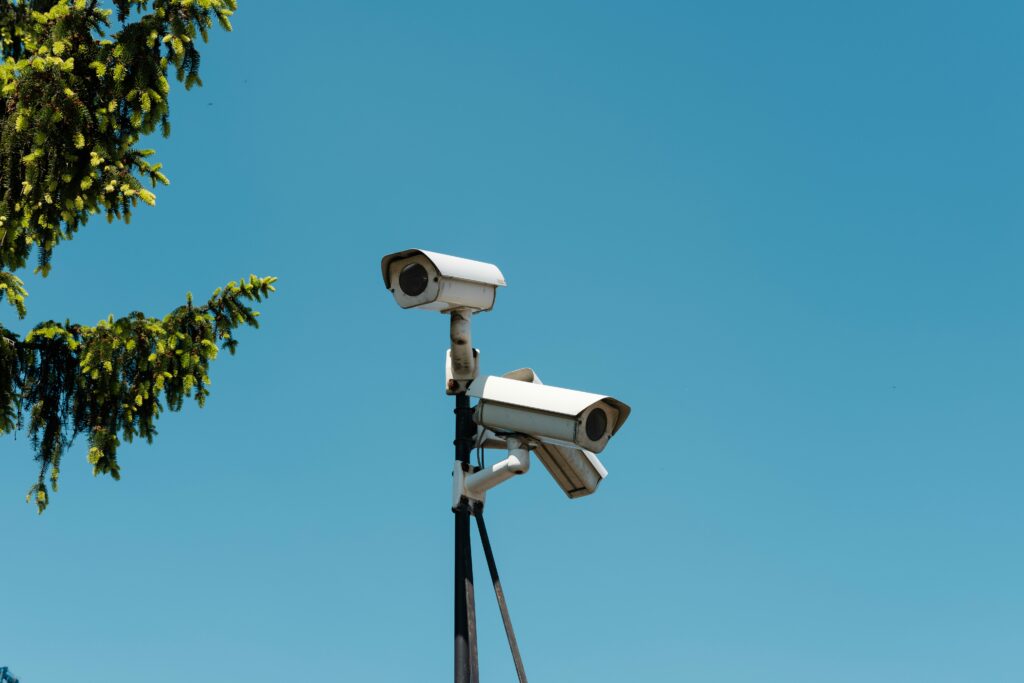
It’s 7:40 a.m., and an employee is calling to tell you someone cut through the fence last night. The footage of the break-in is all there, but no one was watching. You’ve got a perfect record of something you couldn’t stop.
Remote video surveillance connects your cameras to someone who can act while an event is happening, whether that’s you on your smartphone or trained staff at a monitoring center. If you already have a business security system, much of the hardware may already be in place. Below, we’ll walk through how monitoring works and how to choose the right level for your property.
Recording vs. Responding
Recorded footage helps with police reports and insurance claims. With video surveillance monitoring, your cameras are tied to alerts and a response plan.
When something happens, a monitored system can:
- Send an alert to you, a monitoring center, or both
- Show you live video, so you can tell a raccoon from a burglar
- Get police or a key holder on the way while it’s still happening
- Save the clip for your records
With remote video surveillance, your video surveillance system acts less like a rearview mirror and more like a windshield.
How Remote Video Monitoring Works, Step by Step
Most remote video monitoring setups work in roughly this order:
- Cameras and sensors cover the property. Typical spots include entrances, parking lots, loading docks, stockrooms, and fence lines.
- Something trips. A door opens after hours, a perimeter alarm sounds, or a camera’s analytics flag a person where no person should be.
- The alert goes out. Depending on the setup, it goes to your phone, a monitoring center, or both.
- Someone responds. With UL Listed alarm monitoring, trained staff contact the police, a key holder, or the fire service.
- The event is saved. Footage is timestamped and stored for later review.
When your cameras, alarms, and remote video monitoring are tied together, several of these steps happen at once. One perimeter alarm can start recording, lock the doors, and send live video to your phone.
Three Levels of Business Video Monitoring
Providers use “monitored” to mean different things. Before you compare remote video surveillance options, find out which of these three levels you’re being quoted.
You watch it. Alerts and live video go to your phone, and you decide what to do. It costs the least, but it only works if you see the alert, and at 2 a.m. you probably won’t.
Alarm-triggered monitoring. Your alarm panel reports to a monitoring center 24/7. When an alarm trips, staff there call the police, a key holder, or the fire service, and the video still comes to your phone. If you miss the alert, someone else is already on it.
Professionally watched video. In this kind of video monitoring service, operators look at the video when an alert comes in and decide whether to call for help. Some services can also talk through a speaker onsite to warn off an intruder.
A small office might do fine with phone alerts and alarm monitoring. A contractor yard with expensive equipment and nobody onsite overnight is a better case for video surveillance monitoring by trained operators.
What Remote Video Surveillance Covers (And What It Doesn’t)
Depending on where the cameras go, a system can watch:
- Doors, gates, and loading docks
- Parking lots and fence lines
- Stockrooms, server rooms, and cash registers
- Your property on nights, weekends, and holidays
- More than one location, from a single app
It has its limits. It doesn’t replace locks or access control. Poor lighting, a bad camera angle, or a weak internet connection will interfere with what it can see. And while it speeds up the response, it can’t stop every incident.
Camera choice and placement matter a lot. Our post on how surveillance cameras for business can improve security covers that side in greater detail.
Questions to Ask a Video Monitoring Service
Before you sign anything, ask:
- When something trips, does a person look at the video, or does it just go to your phone?
- What happens after an alert, and who gets called first?
- Is it monitored around the clock, or only after close?
- Will it work with the cameras, alarms, and network you already have?
- Is the monitoring UL Listed?
Remote Video Surveillance FAQs
Is someone watching my cameras 24/7? Usually not. Most monitoring centers respond to alerts instead of watching every feed around the clock. With alarm monitoring, staff act when an alarm trips. With a professionally watched setup, operators pull up the video once an alert comes in.
Will it work with my existing cameras? Often, yes. It depends on how old the cameras are and what recording system they connect to. An integrator can tell you what can stay and what needs replacing.
What happens if the internet goes down? Cameras and recorders can usually keep recording onsite, but remote viewing and video alerts need a connection. Ask whether your alarm panel has a cellular backup, so alarm signals still reach the monitoring center.
Setting Up Monitoring With NGSC
You may not need to replace much to get remote video surveillance. Next Generation Security Concepts, Inc. (NGSC) is a full-service integrator, and we often build on the cameras, alarms, and network a business already has. Our UL Listed monitoring connects your alarms to emergency authorities 24/7, and we can set up your system so a perimeter alarm also starts recording and sends live video to your phone.
Here’s how it usually goes:
- You contact our team or call 540.338.8160.
- We look at what you have now and the areas you’re most concerned about.
- We recommend a business video monitoring setup that fits your property and your budget.
We work with businesses across Maryland, Virginia, West Virginia, and Washington, DC. With the right setup, you’ll hear about a problem while it’s happening, not at 7:40 the next morning.